
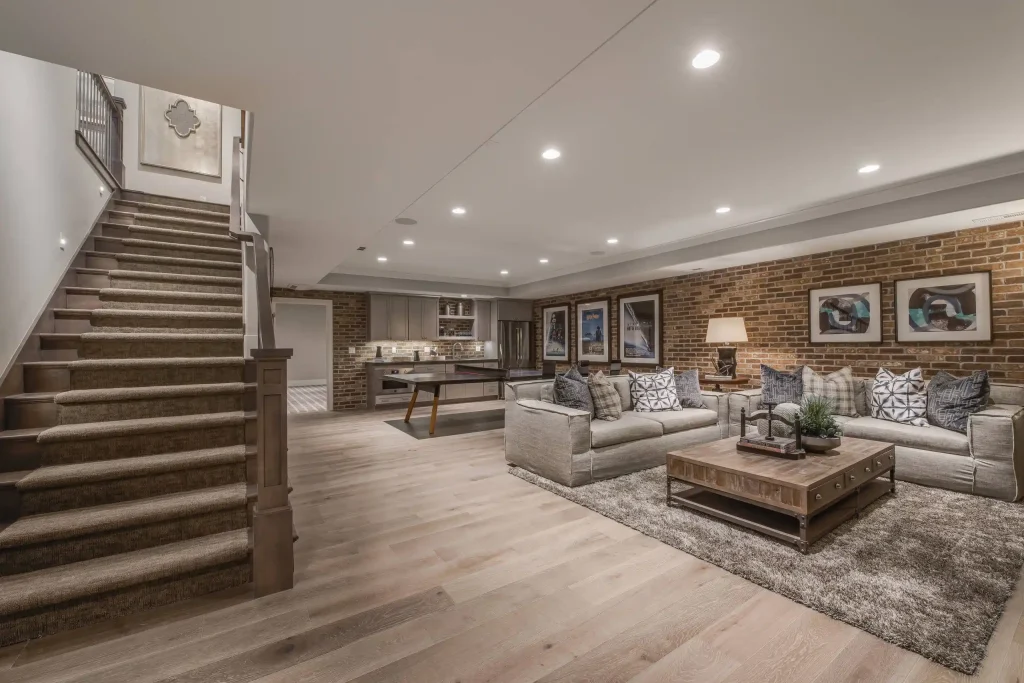
A basement is often the most underused space in a home. With the right plan, it can become a family room, a home office, a guest suite, or a gym. This guide covers what basement renovation services include, how to plan the project, what to fix first, and how to choose flooring and finishes that last.
What Are Basement Renovation Services?
Basement renovation services cover the work needed to turn an unfinished or outdated basement into a comfortable, safe, and usable living area. The scope depends on the condition of your space and what you want from it.
A typical project can include:
- Moisture control and waterproofing
- Framing, insulation, and drywall
- Electrical and plumbing updates
- Flooring installation
- Lighting, ceilings, and paint
- Bathrooms, kitchenettes, or built-in storage
Some people use the terms basement remodeling and basement finishing interchangeably. In practice, finishing usually means converting a bare basement into livable space. Remodeling often means updating a basement that is already partly finished. Both fall under the wider idea of renovation.
How to Plan a Basement Renovation
Good planning saves money and prevents delays. Before you choose paint colors or flooring, work through three basics.
Assessing Your Basement’s Current Condition
Start with a careful look at the space. Check for damp spots, musty smells, cracks in the walls or floor, and white powdery residue on concrete. Look at ceiling height, since many building codes require a minimum height for living areas. Note where the plumbing, electrical panel, and furnace are located.
If you see signs of water damage or structural cracks, get them inspected before any design work begins.
Defining Your Basement’s Purpose and Layout
Decide how you will use the space. A movie room needs different lighting and sound control than a home office. A guest bedroom may need an egress window for safety, and a bathroom needs access to plumbing lines.
Sketch a simple layout that shows where each zone will go. Think about traffic flow, storage, and natural light from the start.
Setting a Realistic Renovation Budget
Set a total budget and add a buffer of 10 to 20 percent for surprises. Basements often hide problems behind walls, such as old wiring or moisture issues. List your must-haves first, then your nice-to-haves. This makes it easier to adjust if costs rise.
Popular Basement Remodeling Ideas
The best basement renovation ideas match how your household actually lives. These are some of the most popular options:
- Family entertainment room: A media wall, cozy seating, and layered lighting make a comfortable movie or game space.
- Home office: A quiet, separate area is ideal for remote work, especially with sound insulation.
- Guest suite: A bedroom, small bathroom, and closet give visitors real privacy.
- Home gym: Rubber flooring, mirrors, and good ventilation turn a basement into a workout zone.
- Kids’ play area: Soft flooring, built-in storage, and durable finishes keep things practical.
- Wet bar or kitchenette: A compact setup is great for hosting without going upstairs.
- Rental or in-law suite: A private entrance and full amenities can add flexibility and value.
Many homeowners combine two or three of these in one open layout, using rugs, lighting, or partial walls to define each zone.
Basement Waterproofing Before Renovation
Waterproofing should come before any finishing work. Covering a damp basement with new drywall and flooring only hides the problem. Moisture can lead to mold, warped materials, and bad odors.
Common Causes of Basement Moisture
Moisture usually comes from a few familiar sources:
- Poor grading that directs rain toward the foundation
- Clogged or short gutters and downspouts
- Cracks in foundation walls or floors
- A high water table
- Condensation from humid air meeting cool concrete
- Failed or missing drain tile
Knowing the cause helps you choose the right fix.
Waterproofing Methods and Drainage Options
Solutions range from simple to complex. Exterior fixes include regrading the soil and extending downspouts. Sealing cracks and applying waterproof coatings can help with minor seepage. For larger problems, an interior drainage system with a sump pump moves water away from the slab. In severe cases, exterior excavation and membrane installation may be needed.
A qualified contractor can match the method to your actual conditions rather than guessing.
Signs Your Basement Needs Waterproofing
Watch for these warning signs:
- Damp or wet floors after rain
- Musty odors
- Peeling paint or bubbling walls
- Visible mold or mildew
- Efflorescence, the white mineral deposits on concrete
- Rusting on metal items stored below grade
If you notice any of these, address them before you start renovating.
Basement Flooring Options and Design Ideas
Flooring in a basement faces unique challenges. Concrete slabs stay cool and can hold moisture, so the best basement flooring and design choices resist dampness and feel comfortable underfoot.
Here are common options:
- Luxury vinyl plank (LVP): Water resistant, warm looking, and easy to install. It is one of the most popular choices.
- Porcelain or ceramic tile: Durable and moisture proof. It can feel cold, so consider radiant heating.
- Engineered wood: More stable than solid hardwood, though it still needs a dry basement and a proper subfloor.
- Carpet tiles: Soft, easy to replace if damaged, and good for play areas.
- Sealed or stained concrete: Modern, low maintenance, and budget friendly.
- Rubber flooring: Ideal for gyms because it is tough and cushioned.
A raised subfloor system can add warmth and a moisture barrier under many of these materials.
For design, light colors and good lighting help a basement feel open. Recessed lights, wall sconces, and lamps work well together. Pale walls, mirrors, and glass doors bounce light around. If ceilings are low, keep the look simple and avoid heavy fixtures.
Basement Finishing Services and Material Choices
Basement finishing services handle the structure and surfaces that turn raw space into a room. Material choices matter more below ground than in the rest of your home.
Some key decisions include:
- Wall framing: Metal studs resist moisture and pests better than wood in many cases.
- Insulation: Rigid foam or closed cell spray foam against foundation walls helps control moisture and temperature.
- Drywall: Moisture resistant or mold resistant boards are a smart choice in lower levels.
- Ceilings: Drywall gives a clean look. Drop ceilings keep access to pipes and wires.
- Doors and trim: Choose materials that handle humidity well.
Do not forget ventilation. A dehumidifier or a proper HVAC extension keeps air fresh and protects your investment over time.
How Much Does Basement Renovation Cost?
Costs vary widely based on location, size, condition, and finish level. As a rough guide, many homeowners in North America see basic finishing land somewhere between $20 and $50 per square foot, while high end projects with bathrooms and custom features can go well beyond that. Your local market may differ, so treat these numbers as a starting point only.
The biggest cost drivers are:
- Waterproofing or structural repairs
- Adding a bathroom or kitchenette
- Electrical and plumbing changes
- Flooring and finish quality
- Permits and inspections
- Egress windows or ceiling height work
Get at least three written quotes and compare what each one includes. The lowest price is not always the best value if it leaves out key work.
Common Basement Renovation Mistakes to Avoid
A few errors show up again and again. Knowing them can save you time and money.
- Skipping moisture control. Finishing over a damp space is the most costly mistake.
- Ignoring permits. Unpermitted work can cause trouble when you sell or file an insurance claim.
- Underplanning lighting. Basements have less natural light, so plan layers of lighting early.
- Choosing the wrong flooring. Solid hardwood and standard laminate often struggle in damp conditions.
- Forgetting access. Cover-ups can block shutoff valves, cleanouts, or electrical panels.
- Neglecting safety. Bedrooms need proper egress, and smoke and carbon monoxide detectors are essential.
- Setting a tight budget with no buffer. Hidden issues are common in older homes.
How Long Does a Basement Renovation Take?
Most projects take between 4 and 12 weeks, depending on scope. A simple finish with basic rooms may move quickly. Adding a bathroom, fixing water issues, or waiting on permits can extend the schedule.
A general timeline looks like this:
- Planning and design: 1 to 3 weeks
- Permits and approvals: 1 to 4 weeks, varying by area
- Waterproofing and repairs: 1 to 3 weeks if needed
- Framing, electrical, and plumbing: 1 to 3 weeks
- Insulation and drywall: 1 to 2 weeks
- Flooring, paint, and fixtures: 1 to 3 weeks
Ask your contractor for a written schedule, and remember that material delivery and inspections can affect timing.
When Should You Hire Professional Basement Renovation Services?
Some small tasks, like painting or laying carpet tiles, suit confident DIYers. Larger jobs call for professional basement renovation services, especially when safety, code compliance, or moisture are involved.
Consider hiring a pro if your project includes:
- Waterproofing or foundation repairs
- New electrical circuits or plumbing
- Structural changes or new windows
- A bathroom or kitchenette
- Permit requirements in your area
When choosing a contractor, look for an experienced basement renovation team with proper licensing, insurance, and a portfolio of similar work. A local basement renovation company will also know regional codes, soil conditions, and weather patterns. Ask for references, read recent reviews, and request a detailed written contract that lists materials, timelines, and payment terms.
Final Thoughts
A well planned basement can add comfort, function, and value to your home. Start with a clear purpose, deal with moisture first, and choose materials made for below grade spaces. Take time to compare quotes and check credentials. With the right approach, your basement can become one of the best rooms in the house.